
IUI Success Rate and How to Improve Your Odds
What Are Real IUI Success Rates? Here’s What the Data Shows
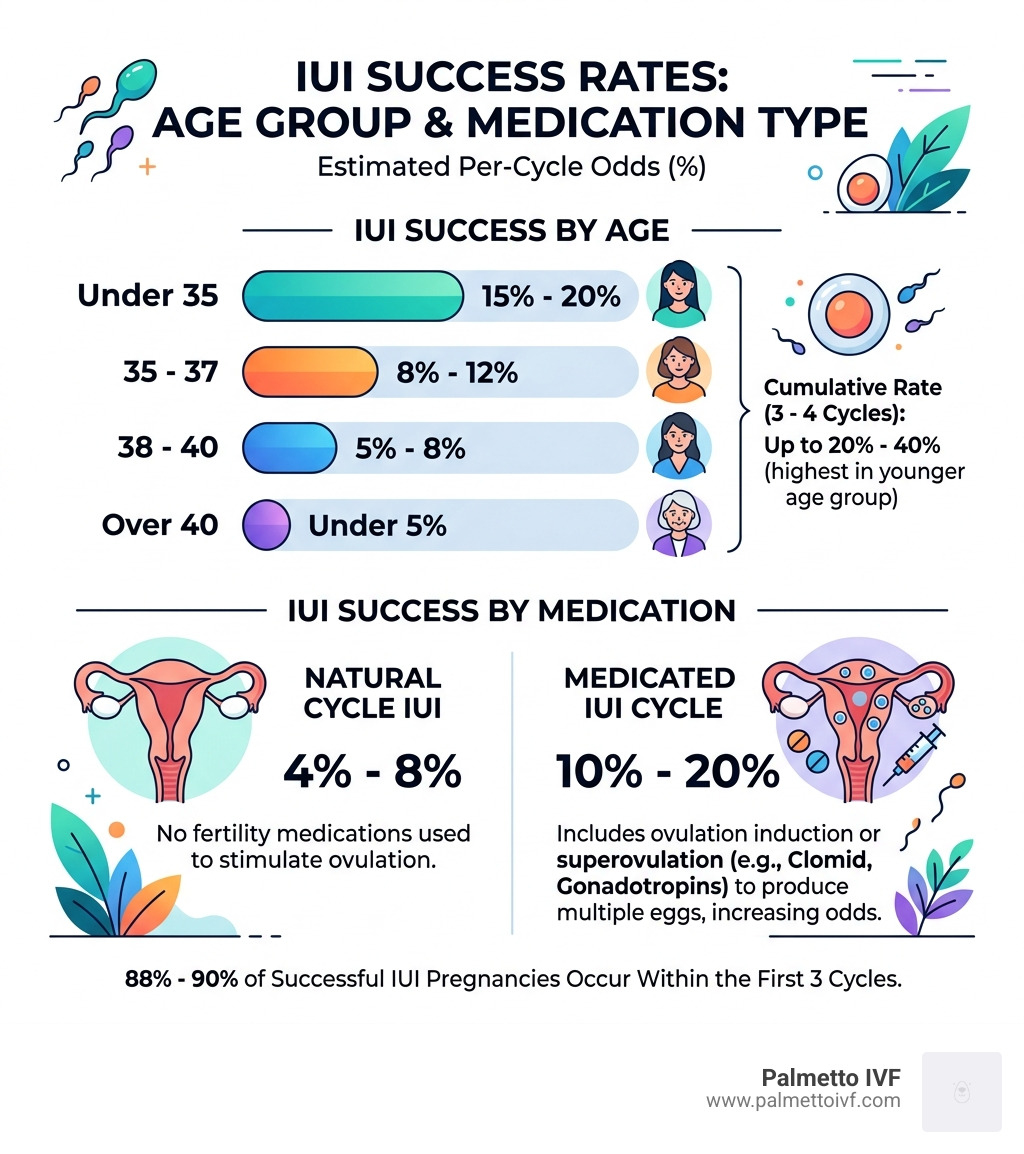
IUI success rate statistics vary widely depending on your age, diagnosis, and whether fertility medications are used. Here’s a quick breakdown:
| Age Group | Per-Cycle Success Rate | Cumulative Rate (3-4 Cycles) |
|---|---|---|
| Under 35 | 15% – 20% | 20% – 40% |
| 35 – 37 | 8% – 12% | 15% – 30% |
| 38 – 40 | 5% – 8% | 10% – 20% |
| Over 40 | Under 5% | Under 10% |
These numbers assume medicated IUI cycles. Natural cycle IUI (no medication) tends to fall in the 4% to 8% per-cycle range.
One in six couples experiences infertility, according to the World Health Organization. For many of them, IUI is the first step — and often the right one.
But the most important question isn’t “does IUI work?” It’s “will it work for me?”
Because IUI success rates aren’t one-size-fits-all. Your age, your diagnosis, your sperm quality, and the medications used all shift the odds significantly. A large retrospective study of nearly 2,900 IUI cycles found an overall viable birth rate of 9.4% per cycle — but that single number hides a wide range of individual outcomes.
The good news: 88% to 90% of all successful IUI pregnancies happen within the first three cycles. That means if IUI is going to work for you, it usually becomes clear fairly quickly.
This guide breaks down exactly what the research says — by age, diagnosis, medication type, and more — so you can walk into your next fertility appointment with real information.
What is IUI and How Does it Work?
Intrauterine Insemination (IUI), often referred to as artificial insemination, is a relatively simple fertility procedure. The goal is to give sperm a “head start” by placing it directly into the uterus, bypassing the vagina and the cervix. This significantly shortens the distance sperm must travel and helps them avoid being trapped in cervical mucus, which can sometimes be hostile to sperm.
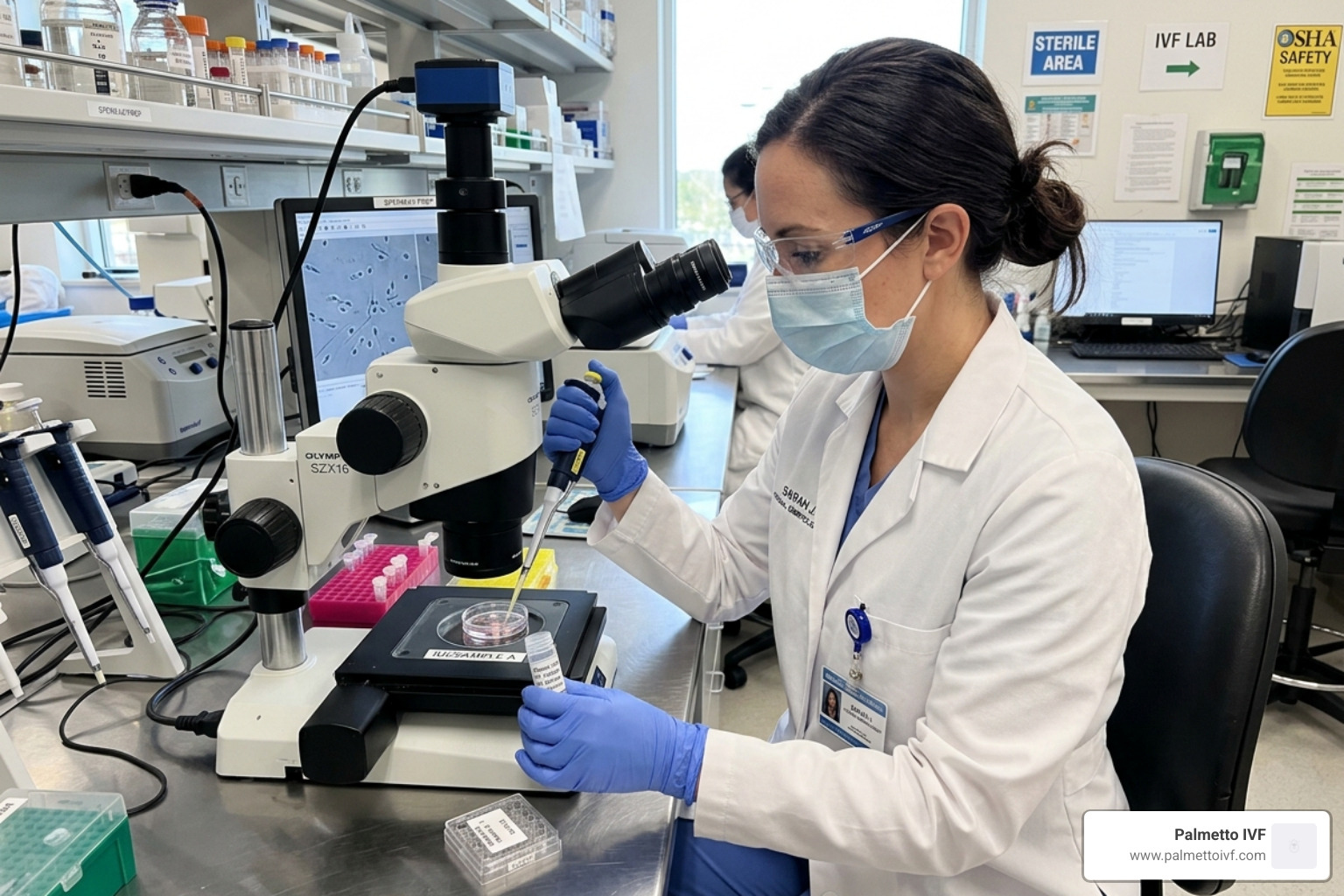
The Sperm Washing Process
Before the procedure, the semen sample undergoes a process called “sperm washing.” In our lab, we separate the highly motile, healthy sperm from the seminal fluid, debris, and non-moving sperm. This creates a concentrated “power shot” of the best possible candidates for fertilization. This step is vital because seminal fluid contains prostaglandins that can cause the uterus to cramp painfully if injected directly.
The Procedure Steps
The actual IUI is much like a Pap smear. We use a speculum to see the cervix and then thread a very thin, flexible catheter through the cervical opening into the uterine cavity. The washed sperm is then gently injected. The entire process takes about 5 to 10 minutes and rarely requires any form of pain relief or anesthesia.
Who is IUI For?
IUI is a versatile tool in reproductive medicine. It is frequently recommended for:
- Unexplained Infertility: When standard testing doesn’t reveal a clear cause for the struggle to conceive.
- Ovulation Issues: Often paired with ovulation induction medications to ensure eggs are present.
- Mild Male Factor Infertility: Helping lower counts or slightly lower motility reach their destination.
- Cervical Mucus Problems: Bypassing the “gatekeeper” at the cervix.
- LGBTQ+ Family Building and Single Parents by Choice: Utilizing donor sperm to build a family.
According to scientific research on IUI prognostic factors, the success of this procedure depends heavily on the presence of at least one open fallopian tube and a sufficient number of motile sperm.
Understanding the Average IUI Success Rate
When we talk about the iui success rate, we look at two different numbers: the per-cycle rate and the cumulative rate.
The average per-cycle success rate generally ranges from 5% to 20%. While that might sound modest compared to natural conception (which is about 20-25% for a healthy young couple), people seeking IUI have often been trying for a year or more without success.
The 3-to-4 Cycle Rule
Data from 2026 reports shows that if IUI is going to be successful, it usually happens early on. About 88% of successful IUI pregnancies occur within the first three cycles, and 95% occur within the first four. After four failed attempts, the statistical likelihood of success in a fifth or sixth cycle drops significantly. At that point, we usually discuss moving toward more advanced options like IVF.
Success by Medication Type
The medications we use to stimulate the ovaries play a huge role in the final iui success rate.
| Medication Type | Typical Per-Cycle Success Rate |
|---|---|
| Natural Cycle (No Meds) | 4% – 8% |
| Oral Meds (Clomid/Letrozole) | 8% – 15% |
| Injectables (Gonadotropins) | 12% – 20% |
How Age Impacts Your IUI Success Rate
Age is arguably the most significant factor in any fertility treatment. As women age, both the quantity and the quality of eggs (ovarian reserve) naturally decline.
- Under 35: This is the “ideal” window for IUI. Success rates per cycle are often between 15% and 20%.
- 35 to 40: We see a steady decline. For women aged 35-37, the rate is about 10-12%. By age 38-40, it dips to 5-8%.
- Over 40: The prognosis becomes more challenging. Success rates generally fall below 5% per cycle. For women over 43, the rate is often cited as less than 1%.
For those over 40, we often have a candid conversation about whether IUI is the best use of time, or if moving directly to IVF offers a better path to a healthy baby. You can find more info on IUI success by age to help guide your expectations.
How Fertility Diagnosis Affects Your Odds
Not all infertility is created equal when it comes to IUI.
- Unexplained Infertility: This is one of the most common reasons for IUI. With oral medications, the success rate is roughly 7-10% per cycle, but cumulatively reaches 15-25% after three cycles.
- PCOS and Ovulatory Dysfunction: IUI is very effective here because we can use medications to ensure ovulation occurs. Success rates can reach 15% to 20% per cycle.
- Mild Male Factor: If the post-wash sperm count is healthy, IUI can overcome minor issues with motility or count.
- Endometriosis: IUI is effective for Stage I or II (mild) endometriosis, with success rates around 22%. However, for Stage III or IV (severe), the success rate drops drastically to about 5%.
- Tubal Patency: You must have at least one open tube. Interestingly, research shows that a “proximal” blockage (near the uterus) has a better IUI prognosis (38% cumulative success) than a “distal” blockage (near the ovary), which sits at only 11.7%.
IUI vs. IVF: Comparing Success and Risks
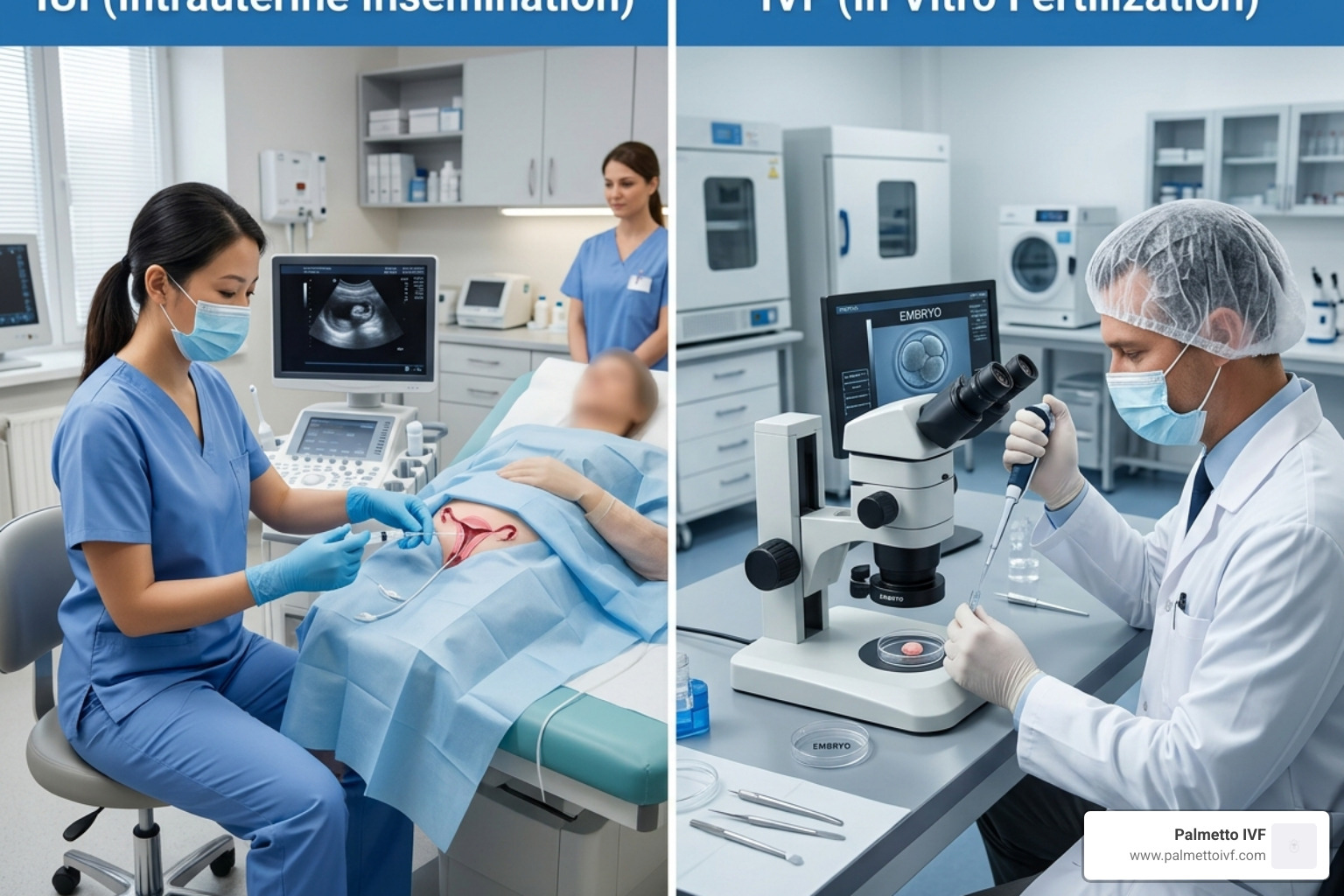
It’s natural to compare IUI with In Vitro Fertilization (IVF). While IUI is less invasive and more affordable, IVF offers much higher success rates.
Success and Invasiveness
IVF success rates for women under 35 are often between 40% and 60% per embryo transfer. IVF bypasses almost all the “natural” hurdles by fertilizing the egg in a lab and placing a developed embryo directly into the uterus. IUI, on the other hand, still relies on the body to handle fertilization and transport the egg through the tube.
The Risk of Multiples
One of the primary risks of IUI is multiple pregnancies (twins, triplets, or more). Because we use medications to stimulate the ovaries, you might release more than one egg.
- With oral meds like Clomid or Letrozole, the twin rate is about 8% to 10%.
- With injectable gonadotropins, that risk jumps to 15% to 30%.
In IVF, we can control this risk much more effectively through Single Embryo Transfer (eSET), keeping the multiple birth rate under 2%.
Ovarian Hyperstimulation Syndrome (OHSS)
This is a rare but serious complication where the ovaries overreact to fertility medications. It is more common with injectable medications than with oral ones. Symptoms include severe bloating, nausea, and pelvic pain.
How to Improve Your Odds of Success
While some factors are out of our hands, there are several ways we can optimize your iui success rate.
1. Follicle Monitoring and Timing
Timing is everything. We use transvaginal ultrasounds to monitor follicle growth. When the follicles reach the “sweet spot” (usually 18mm to 22mm), we may administer a “trigger shot” (hCG injection) to induce ovulation. The IUI is then performed 24 to 36 hours later.
2. The 9 Million Threshold
The “Total Motile Count” (TMC) after the sperm is washed is a major predictor of success. Scientific research on factors determining IUI success suggests that a post-wash TMC of at least 9 million is associated with the highest pregnancy rates (about 16.9%). If the count is between 1 and 5 million, the success rate drops to 5-8%. If it’s under 1 million, IUI is generally not recommended.
3. The 15-Minute Rest
It sounds simple, but it works. Research has shown that women who remain lying down for 15 minutes immediately after the insemination are approximately 10% more likely to conceive than those who get up right away. We make this a standard part of our care.
Lifestyle Changes to Improve Your IUI Success Rate
Your body’s environment matters just as much as the procedure itself.
- BMI Optimization: Both very low and very high BMIs can negatively impact ovulation and implantation. A BMI over 30 is associated with a 25% lower success rate.
- Smoking Cessation: Smoking can reduce IUI success rates by as much as 50%. It’s the single most important lifestyle change you can make.
- Limit Alcohol and Caffeine: High intake of either can interfere with fertility.
- Supplements: Many specialists recommend CoQ10 (to improve egg and sperm quality), Vitamin D, and a high-quality prenatal vitamin started three months before treatment.
- The “Fertility Diet”: Focus on an anti-inflammatory, Mediterranean-style diet rich in healthy fats, whole grains, and lean proteins.
Frequently Asked Questions about IUI
How many IUI cycles should I try before moving to IVF?
For most patients under 40, the recommendation is 3 to 4 cycles. Because the vast majority of IUI successes happen within this window, continuing past four cycles often leads to diminishing returns. However, for women over 40 or those with specific diagnoses like severe endometriosis, we might suggest moving to IVF sooner to save valuable time.
Is IUI painful or does it require anesthesia?
Not at all. Most patients describe it as being very similar to a Pap smear. You’ll feel the speculum, and you might feel a tiny pinch or some mild cramping as the catheter passes through the cervix, but it is an outpatient procedure that lasts only a few minutes. You can go right back to your normal routine afterward.
Does IUI work better with fresh or frozen sperm?
Fresh sperm generally has a slight edge. One study found pregnancy rates of 21.2% with fresh sperm versus 15.8% with frozen. This is because the freezing and thawing process (cryopreservation) can slightly reduce sperm motility. However, for those using donor sperm or for partners who cannot be present on ovulation day, frozen sperm is still a very effective and successful option.
Conclusion
The journey to parenthood isn’t always a straight line, but IUI provides a hopeful, less invasive path for many families. By understanding the factors that influence the iui success rate—from age and diagnosis to lifestyle and timing—you can make informed decisions that feel right for your specific situation.
At Palmetto IVF, we believe in personalized fertility care. Every family-building journey is unique, and our goal is to provide the expert guidance and compassionate care you need to start your new beginning. Whether you are just starting to explore your options or are ready to take the next step, we are here to help.
For more info about IUI services, or to schedule a consultation with a reproductive endocrinologist, reach out to us today. Your future starts with a single step.
